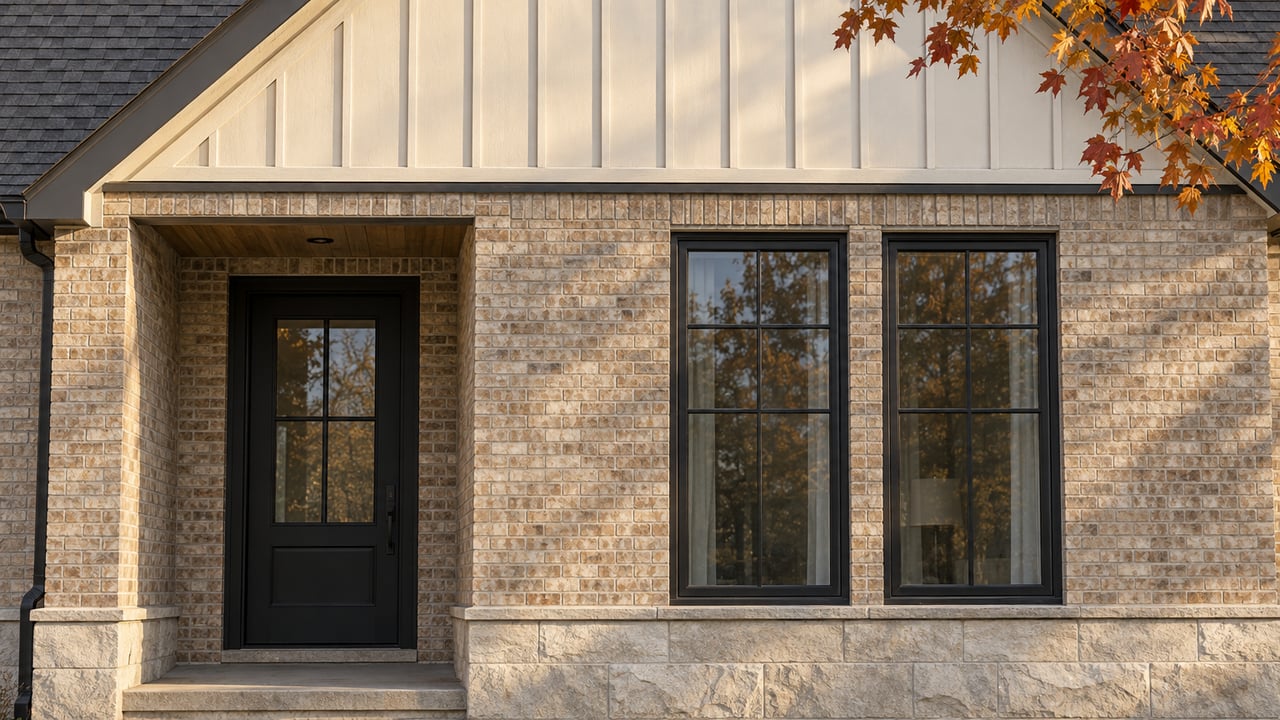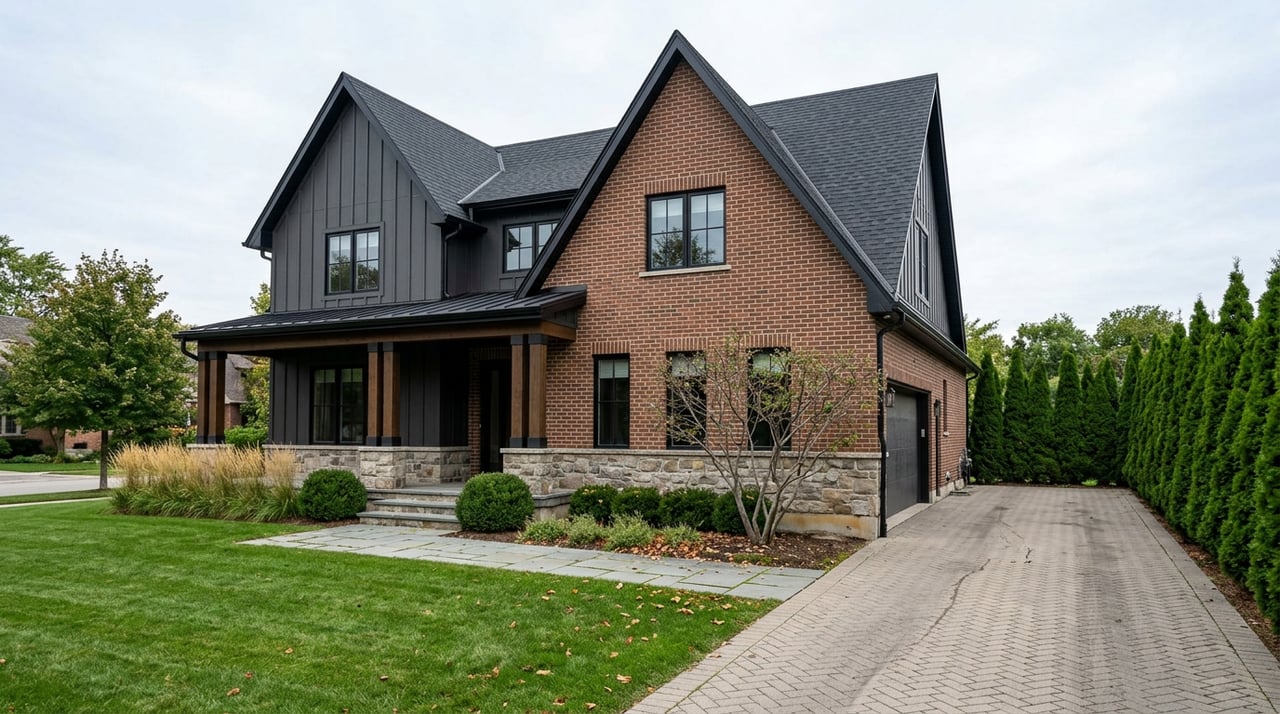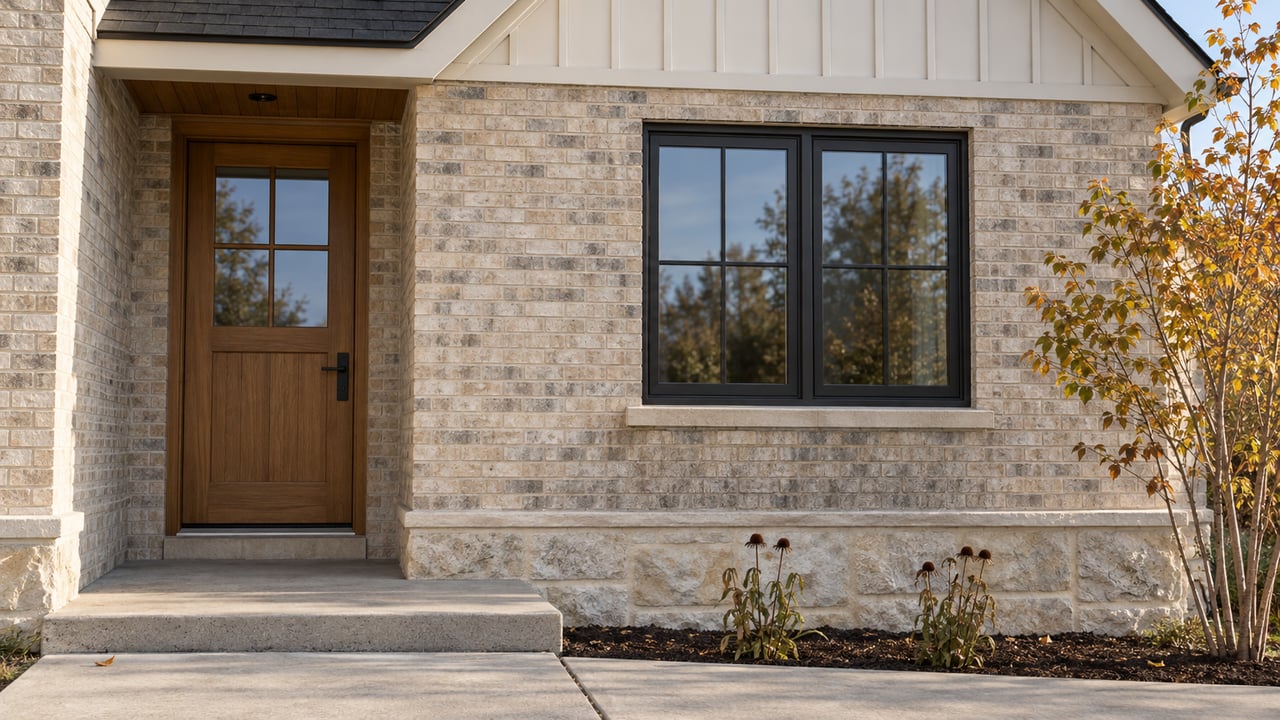
Drive through a new subdivision going up on Barrie's south side this fall and you will hear framing nailers running and see foundation forms still curing in the September air. Drive a few minutes into an established resale neighborhood and you will pass a lawn sign with a price reduction sticker slapped over the original number, five or six weeks into its listing. Both scenes are happening in the same city, in the same season. They are not describing the same market, and the gap between them is worth understanding before you decide whether this is the moment to buy, sell, or break ground here.
The number that looks like a warning sign
Simcoe County posted the largest year-over-year dollar decline in average home price of any region tracked by the Toronto Regional Real Estate Board in August 2026, down 9.1 percent, or roughly $82,000, to $810,904. In Barrie specifically, the median sold price came in at $644,250 in June 2026, down 8 percent from a year earlier, according to reporting from Barrie 360. Zolo's rolling market snapshot for the four weeks ending September 24, 2026 puts Barrie's average house price at $675,203, with 500 new listings entering the market in that window and a median of 38 days on market before a home sells.
None of that is a Barrie problem on its own. Across Ontario, only 13,620 residential properties changed hands through MLS systems in August 2026, the lowest August total in 25 years and 22.6 percent below the ten-year average for the month, per CREA figures cited by Builders Ontario. Ontario's single-family benchmark price sat at $826,900, down 3.4 percent year over year, while active listings climbed to 70,483, some 41.5 percent above the ten-year average. Months of inventory reached 5.2, well past the long-term August average of 3.1. Buyers have more homes to choose from and less urgency to choose fast. That shows up in Barrie's numbers because Barrie is part of Ontario, not because Barrie stopped being a place people want to live.
The bigger question is why buyers are sitting on their hands when a rate environment has already loosened. WOWA's September 2026 housing update notes that despite multiple Bank of Canada rate cuts between June 2024 and October 2025, Ontario's market has not responded the way lower rates would normally predict, with affordability strain and broader economic uncertainty, including tariff concerns, weighing on confidence. That hesitation is provincial. It touches Barrie's resale numbers the same way it touches Peel's or Halton's.
What the building permits say instead
Here is where the story splits. Between January and July 2026, the Barrie census metropolitan area recorded 129 single-detached housing starts, compared with 92 over the same seven months in 2025. That is a 40 percent increase, and it moved in the opposite direction of nearly every comparable Ontario market over that stretch:
- Barrie CMA: up about 40 percent
- Toronto CMA: down about 21 percent
- Hamilton CMA: down about 30 percent
- Guelph CMA: down about 31 percent
- Kitchener-Cambridge-Waterloo: roughly flat to modestly higher
Those figures come from CMHC's Starts and Completions Survey, summarized in the same Builders Ontario analysis, and CMHC's own August 2026 release confirms the national pattern behind them: single-detached activity held up considerably better than the multi-unit and condominium segment through the middle of the year. Builders are not chasing this month's average sale price. A single-detached start reflects a land purchase, a servicing agreement, and a construction commitment made months or years earlier, based on a bet about where population and demand will sit three to five years out. When Barrie is the outlier climbing while Toronto, Hamilton, and Guelph all pull back, that is builders reading the region's trajectory as sound even while the resale ticker looks soft.
Two clocks, one city
Resale price is a clock that resets with every closing. It reflects who happened to be motivated to sell this month, how many competing listings were sitting active, and how nervous buyers were feeling about the broader economy. Construction starts are a slower clock. They reflect decisions locked in during a different part of the cycle, when a builder secured a parcel, worked through Barrie's approvals process, and decided the numbers still worked for a home that will not list for sale until well into 2027 or later.
Simcoe County's broader labour picture plays into this too. The Honda plant in Alliston remains one of the region's larger employers, and any disruption there has a way of rippling into local housing demand and buyer confidence, a dynamic flagged in recent regional market outlooks. That kind of employment anchor matters more to a builder planning a subdivision's five-year absorption than it does to a single seller pricing a listing for next month.
None of this means resale weakness is meaningless. A buyer's market is a buyer's market, and the current one in Barrie is real. It means the two data sets are answering different questions. Resale prices tell you what is happening to sellers who need to move now. Construction starts tell you what people who study this market for a living believe about where it is headed once the current inventory glut clears.
What this means depending on which side of the transaction you're on
If you are a move-up buyer or a downsizer weighing whether to list and buy in the same window, the current spread works in your favour on both ends. A median 38 days on market and 500 new listings arriving every four weeks means less competition for the home you want to buy, and more patience available if your own listing takes a few extra weeks to find its buyer. That is not a signal to wait indefinitely. Inventory this elevated tends to compress once a market senses the bottom, and TRREB's own August commentary noted that tightening inventory combined with renewed price growth is exactly the trade-off buyers on the sidelines are watching for.
If you are looking at land, a development parcel, or a custom build in Simcoe County, the 40 percent jump in detached starts is the more relevant number, not the average resale price. It tells you builders are already competing for serviced lots and skilled trades in this specific market while pulling back in Hamilton and Guelph. That competition tends to tighten timelines and lot availability before it shows up in headline pricing. Acting while resale sentiment is still cautious, rather than after the construction pipeline has caught up with demand, is usually the cheaper version of the same decision.
Barrie's resale market and its construction pipeline are not disagreeing with each other. They are answering to different time horizons, and right now those horizons point in opposite short-term directions for the same long-term reason: people keep choosing to build a life here, even in a month when the average sale price says otherwise.
If you are trying to figure out where your own timeline fits into that gap, whether you are weighing a move this fall or evaluating a piece of land for something further out, The JRB Group can walk through what these numbers mean for your specific plans.