Should you buy a fresh new build or a character-filled resale in Alcona? It is a real decision in Innisfil’s fastest-growing community, and the right choice depends on your timing, budget, and how you want to live. In this guide, you will see how timelines, fees, energy performance, and negotiations compare locally. You will also get a simple checklist to move forward with confidence. Let’s dive in.
Why Alcona stands out
Alcona is identified by the Town of Innisfil as a primary growth area with a plan for a mixed-use, walkable downtown and compact neighbourhoods. That growth frame affects servicing, road networks, and the pace of new phases. You can explore the town’s vision for a mixed-use “Downtown Alcona” for helpful context on where things are headed. See the town’s overview of Downtown Alcona and growth planning.
For price context, recent Innisfil market snapshots through late 2025 and early 2026 place many single-family transactions in the roughly 700,000 to 900,000 range, depending on month and mix. Use this to compare builder releases against resales on your shortlist. Check the latest Innisfil market report summary before you write an offer.
New builds in Alcona: what to expect
Product and lots
You will see a mix of detached homes, townhomes, and bungalow options in master-planned releases. As a local example, Simcoe Woods has marketed detached lots at 39 and 33 feet and 20-foot townhome lots, showing the typical range you can expect. Browse representative plans and lot types on the Simcoe Woods community pages.
Layouts and features
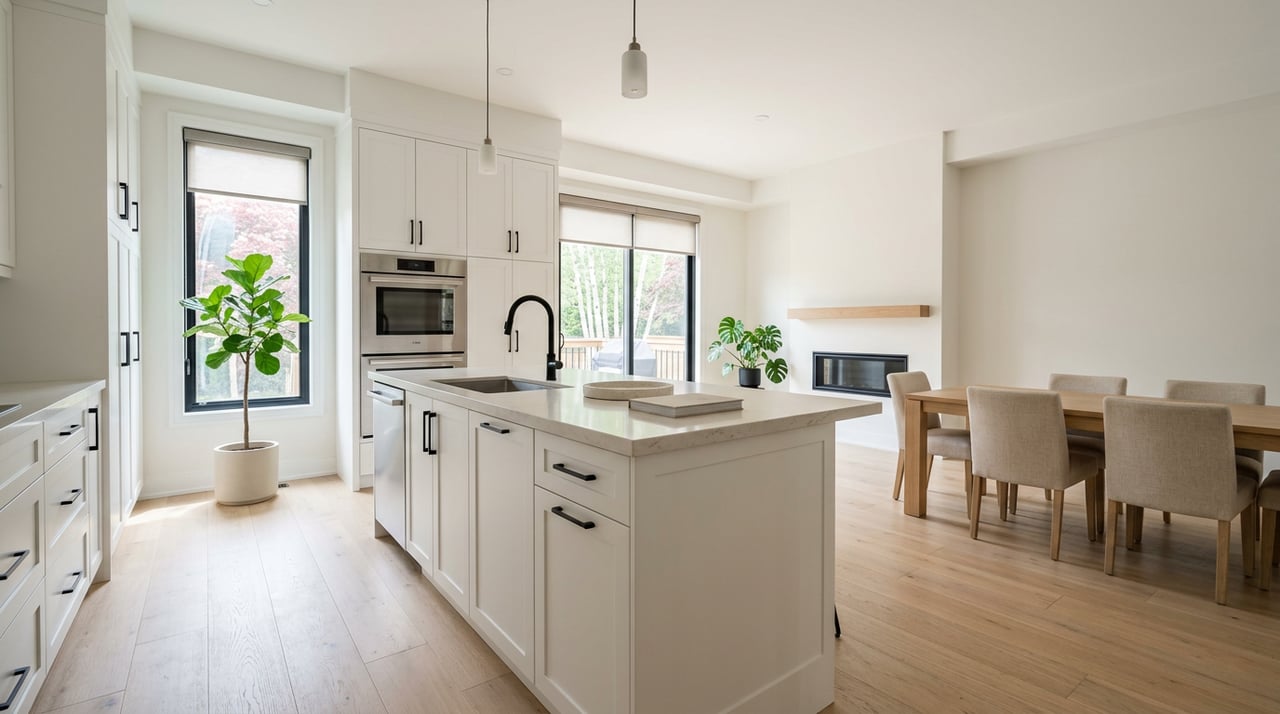
Modern plans tend to deliver open main floors, central kitchen islands, generous primary suites, and laundry on the main or upper level. Flexible dens, built-in storage, and integrated mechanical packages are common. These features help with everyday function and add future resale appeal.
Energy and building code
New homes must meet Ontario’s current Building Code energy baseline, commonly referred to as SB-12 for housing. Many builders add efficiency features like HRVs, heat-pump readiness, or EV rough-ins. Ask if the home follows SB-12, carries an EnerGuide or ENERGY STAR label, and what is included. You can review the Ontario Building Code 2024 reference for context.
Deposits, timelines, and warranty
Pre-construction agreements include Tarion’s Statement of Critical Dates that sets tentative and firm occupancy or closing milestones. Builders can change dates under specific rules, and delayed occupancy compensation may apply, often described as a per-day amount up to a cap. Review how dates, notices, and compensation work in Tarion’s guidance on occupancy dates, delays, and cancellations.
Deposits on new homes are larger and staged compared to resale. Tarion’s deposit protection is tiered, with defined coverage levels based on the purchase price. See Tarion’s summary of deposit protection rules and confirm the builder’s registration and enrolment before you sign.
Fees and builder incentives
New builds reflect municipal Development Charges and, in Alcona sub-areas, specific urbanization fees. An earlier Town of Innisfil pamphlet listed an example Alcona urbanization charge at 2,655 per residential lot, though charges are indexed and can change. Ask your builder whether DCs and any Alcona charges are included or capped and review the town’s Development Charges flyer for the framework.
Contract forms are usually fixed, but builders often negotiate through incentives. You may see upgrade credits, capped levies, assignment fee reductions, or deposit schedule adjustments, depending on the release and market cycle. Always get incentives in writing, as noted in this overview of common pre-construction incentives and cautions.
Resale homes in Alcona: what to expect
Product, lots, and layouts
Resales often offer larger, established lots and mature streetscapes. Older homes may have more traditional, compartmentalized layouts and smaller kitchens by today’s standards. If you want an open-plan main floor or a larger island, you may plan a renovation. If you want quick possession and an established setting, resale can be a strong fit.
Negotiation and timing
Resale deals commonly include conditions such as financing and inspection. Typical closings run 30 to 90 days from acceptance, with flexibility on inclusions and closing date. For a quick primer on offer mechanics and timelines, see this summary of making an offer and closing windows.
Taxes and closing costs
Most resale purchases are not subject to HST on the price. New homes are generally subject to HST, although buyers may be eligible for a federal new housing rebate that can reduce the federal portion. Review the CRA’s GST/HST new housing rebate if you are comparing net costs.
Cost of ownership and energy
A code-built new home can offer lower utility use thanks to up-to-date insulation and mechanicals, especially if enhanced packages are included. Resale operating costs vary widely with age, upgrades, and maintenance history. Ask for recent utility bills, and consider an energy assessment if you want more certainty on likely running costs.
At a glance: key differences
- Timeline to possession
- New build: often 12 to 36 months from purchase to occupancy, governed by a Statement of Critical Dates.
- Resale: typical closing is 30 to 90 days from acceptance.
- Upfront cash and deposit risk
- New build: staged deposits with Tarion-backed protection that varies by price tier.
- Resale: smaller deposit percentages are common and usually held in trust.
- Negotiation levers
- New build: price-adjacent incentives like upgrades, capped levies, assignment terms, or deposit schedules.
- Resale: price, conditions, closing date, inclusions, and inspection-based adjustments.
- Fees and levies
- New build: Development Charges and potential Alcona urbanization charges can apply.
- Resale: fewer builder-related fees, though standard closing costs still apply.
- Warranty and post-possession
- New build: Tarion warranty coverage by defined time periods and categories.
- Resale: no statutory new-home warranty; condition and inspection are key.
Your decision framework
- Budget and net costs. Compare list price, likely incentives, and closing costs. If you are looking at a new build, factor HST and any eligible rebates. For resale, review utilities and immediate maintenance.
- Timeline and certainty. Decide if you can wait for a build and accept possible schedule moves, or if you need a fixed closing window.
- Lifestyle and layout. If you want a turnkey, modern plan with a large island, new can be ideal. If you want a mature lot and quicker move-in, resale often wins.
- Customization appetite. New construction offers design center choices within a package. Resale offers post-close renovations on your timeline and budget.
- Risk tolerance. New builds carry construction and servicing risks tied to phased growth. Resales carry renovation and condition risk that you can often scope with inspections.
Alcona buyer checklist
If you are considering a new build
- Confirm Tarion and HCRA registration and get the Tarion enrolment number. Review Tarion’s deposit protection rules.
- Get the full deposit schedule and where funds are held. Ask for all incentives in writing.
- Review the Statement of Critical Dates, delay notices, and compensation framework in Tarion’s guide on occupancy dates and delays.
- Ask whether Development Charges and any Alcona urbanization charges are included or capped. Keep a copy of the builder’s closing disclosure that references the town’s fee schedule.
- Request the energy package details: SB-12 path, any EnerGuide or ENERGY STAR label, HRV, heat pump, and EV rough-in.
If you are considering a resale
- Ask for the seller’s property disclosures, permits for major work, and recent utility bills.
- Budget for a professional home inspection and any immediate repairs or updates.
- Confirm zoning if you plan additions or an accessory unit. Check minimum frontage, lot coverage, and setback standards for the property’s zone.
If you want a clear path tailored to your budget and timeline, we can help you compare live builder releases and the best-positioned resales, then negotiate the details that matter. Elevate your next move with The JRB Group.
Exploring your options? Browse current Innisfil homes for sale or reach out to discuss new builds, resales, and what fits your timeline best.
FAQs
How long do new builds in Alcona typically take?
- Many buyers see 12 to 36 months from agreement to occupancy, governed by a Tarion Statement of Critical Dates that can move within defined rules.
What deposit protection applies to new homes in Ontario?
- Tarion provides deposit protection with tiered coverage based on price; always verify the builder’s enrolment and how your deposits are held before signing.
Are new homes subject to HST while resales are not?
- New homes are generally subject to HST with potential federal rebate eligibility, while most resale purchases are not subject to HST on the sale price.
What local fees should I expect with a new build in Alcona?
- Development Charges apply town-wide and some Alcona sub-areas include an additional urbanization charge; ask if these are included or capped in your agreement.
Can I negotiate with a builder the same way as a resale seller?
- Builders often hold firm on contract terms but negotiate through incentives like upgrades, capped levies, or deposit schedules, while resale negotiations focus on price, conditions, and closing date.